Surf Spots Near Papagayo: A Guide to Guanacaste's Best Waves
Some of Central America's most storied waves sit within reach of Peninsula Papagayo, from Witch's Rock and Ollie's Point by boat to the Tamarindo breaks by car. Here is how to plan around all five, whatever your level.
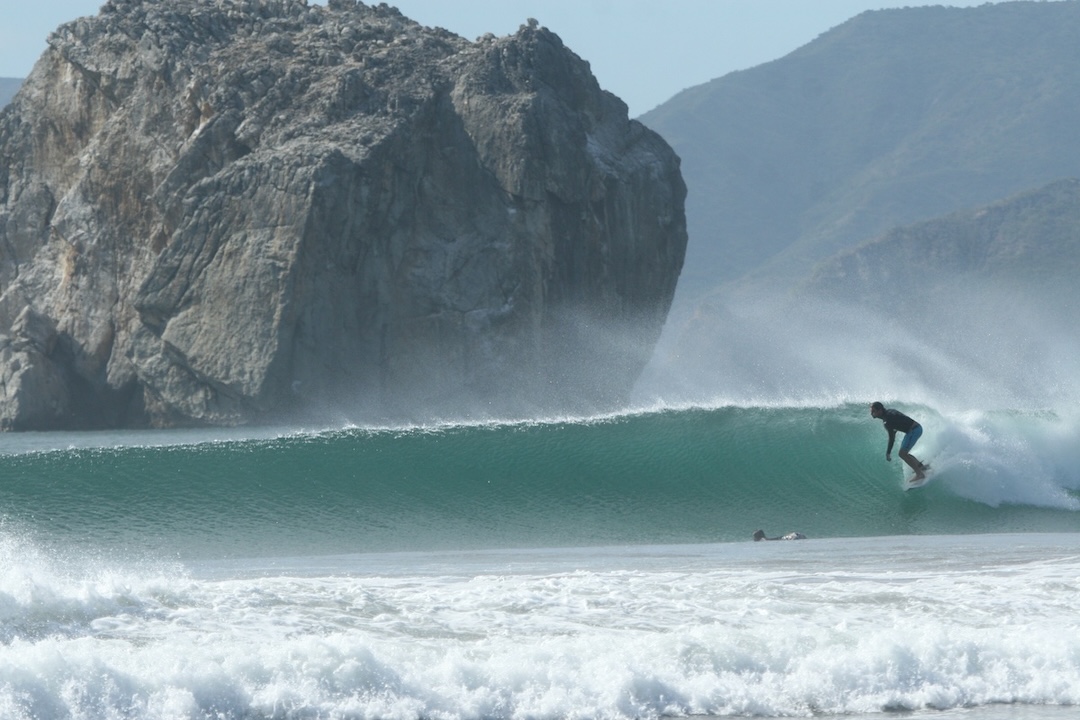
Peninsula Papagayo is known for calm water. The coves are protected, the swimming is easy, and the snorkeling is some of the best on this coast. What surprises a lot of guests is how close that calm sits to some of the most storied waves in Central America.
Guanacaste's north Pacific is a surf region with real range. Within an hour or two of the peninsula you can reach a remote beach break made famous by a surf film The Endless Summer II, a right point that peels for the length of three football fields, and a friendly beach town where most of Costa Rica learns to stand up. The peninsula makes a rare kind of base for it. The two marquee breaks are reached by boat, and the pick up spot is Nacascolo Beach, right on the peninsula, the stretch of white sand that many of our villas overlook. The rest are down the coast near Tamarindo, an easy drive when you want one.
Here is how we think about the five breaks worth knowing, split by how you get there.
By Boat: The Two Legends
The most famous waves in the region sit inside Santa Rosa National Park, north of the peninsula. There are no roads to speak of, no development for miles, and no crowds beyond the surfers who made the trip. Access is by boat, which we can arrange for you as a private charter from Nacascolo Beach, the calm, white-sand cove on the peninsula that a number of our villas look out over. It is the kind of day a lot of people plan a whole trip around: open ocean, wildlife on the way out, and a wave most surfers only know from film.
Witch's Rock (Roca Bruja)
Witch's Rock is the one people picture when they picture Costa Rican surf. Named for the dark rock formation standing off Playa Naranjo, it was made famous by The Endless Summer II, and it has earned its reputation the hard way. The wave is a sand-bottom beach break shaped by the estuary, which lays down a long, even sandbar and produces clean lefts and rights that wall up without closing out.
It has range. On a smaller day it is playful and forgiving, well within reach of a confident intermediate on a longboard. On a proper swell it gets hollow and fast, the kind of leg-burning barrel that draws experienced surfers from all over. Offshore winds, best from roughly December through April, groom the face; the bigger swell tends to arrive later in the year. The boat ride from the peninsula runs about 45 minutes to an hour.
Ollie's Point (Potrero Grande)
A few miles further north, deeper into the park, is Ollie's Point, the second wave from The Endless Summer II and, for many, the better one when it turns on. This is a right-hand point break, not a beach break, which means the waves wrap around the headland and peel in the same direction for a long, long way, with rides that can run close to 300 meters. It is as forgiving as it is long, which makes it a genuine pleasure for intermediate surfers, not just experts.
The catch is that Ollie's is particular. It needs a solid south or southwest swell to break at all, and it is best at lower tides, so it does not perform every day the way Witch's Rock does. When the swell lines up, it is worth the extra distance. Because the two breaks work on different swells and tides, a full-day charter that visits both is the smart way to go: you improve your odds of scoring at least one of them at its best.
By Car: The Tamarindo Cluster
South of the peninsula, roughly an hour to ninety minutes by car depending on the beach, sits the Tamarindo area. This is the other half of the region's surf, and it is more about variety and ease than remote legend. You can drive down for a morning, surf a break matched to your level, have lunch in town, and be back at the villa by afternoon.
Playa Grande
Just across the estuary from Tamarindo, Playa Grande is a long, quiet beach break inside Las Baulas National Marine Park. Because the park limits development, the beach stays largely empty, and the waves spread out along roughly three miles of sand, so you can walk until you find a peak to yourself. The main peak, in front of the main parking area, throws A-frames with lefts and rights and the occasional barreling section. It faces a little more south than Tamarindo and holds more size, which makes it a favorite of surfers who want punchier waves without a crowd.
Two things to know. Playa Grande is one of the most important leatherback turtle nesting sites in the Pacific, so the beach is closed to visitors at night during nesting season (October through February) unless you are with a licensed guide, which is its own memorable outing. And the lineup can carry a more local feel than the beginner beaches, so a little humility and standard surf etiquette go a long way.
Tamarindo
Tamarindo is the region's surf town, and it has the best surf infrastructure in the country: schools, camps, board rentals, and a soft, sandy beach break that runs in the three-to-five-foot range and forgives a beginner's mistakes. If anyone in your group has never surfed, this is where they start, and the odds of standing up on day one are high. It is also the social center of the coast, with restaurants and an easy after-surf scene.
More experienced surfers are not left out. The river mouth at the north end (El Estero) offers a longer right that longboarders love, and the rocky reef peaks near the point, Pico Pequeño and Pico Grande both can hold real waves.
Playa Langosta
A few minutes south of Tamarindo, Playa Langosta is the quieter, more textured option. The main draw is a river-mouth wave off the San Francisco estuary that comes up fast, along with a reef break called Sapo that offers lefts and rights over rock. The southern exposure means it can hold more size than Tamarindo, and the crowds are thinner. It rewards intermediate and advanced surfers who read a lineup well. The trade-off is a rocky bottom in places, so it is not the spot for a first lesson.
When to Go, and How to Plan It
You can surf this coast all year. The green season, roughly May through October, brings the biggest and most consistent south swells, which is when the points and beach breaks are at their fullest. The dry season, November through April, brings cleaner conditions and lighter crowds at the marquee breaks, along with the offshore winds that make Witch's Rock sing. Water stays warm enough year-round that a wetsuit is optional.
The simplest way to think about a surf-focused stay: use the peninsula as your base, book a private boat day to Witch's Rock and Ollie's Point when the forecast looks right, and keep the Tamarindo cluster as your flexible option for the other mornings. It is a rare setup, world-class waves within reach, and a quiet, comfortable place to come home to at the end of the day.
Staying at the Peninsula, With the Coast at Your Door
A surf trip runs smoother from a house than a hotel. At The Smart Villas, our homes on Peninsula Papagayo give you space for boards and gear, a kitchen for the early starts and late lunches, and a concierge who can line up the boat charter, arrange a guide, and match the day to the swell and to your group's level. Whether you are chasing barrels at Witchs's Rock or getting the kids up on a wave in Tamarindo, we can build the days around it.
Some places deserve more than a hotel. If a surf trip to Guanacaste is on your mind, reach out through thesmartvillas.com and we will help you plan it.
Let us craft something extraordinary.
Arrange a consultation with our team. We'll understand what you need, then tailor a residence and itinerary to fit — usually within a few hours.
Frequently asked questions.
Everything you need for a seamless stay
The Smart Villas is a curated collection of luxury villas, not a marketplace. That means no platform fees, no service charges, and no algorithm deciding what you see. Booking directly with us typically saves guests 12–15% compared to the same property listed on Airbnb or VRBO.
Every home is individually selected, and every stay is concierged by our team from arrival to departure. Guests don't deal with an app or a call center. They deal with people who know these homes personally and handle every detail — transfers, restaurant reservations, local experiences — as a baseline, not an add-on.
Staying in a Smart Villa means you get the full Papagayo resort experience without being confined to one property.
Golf cart to the Four Seasons for dinner. Walk to the Ritz-Carlton Reserve for a spa treatment. Hit the Arnold Palmer Golf Course in the morning, come home to your private pool in the afternoon. The beach clubs, the restaurants, the activities, all of it is accessible.
You're just not paying resort prices to sleep in a hotel room when you could have an entire home. The guests who choose a villa aren't skipping the resort experience. They're adding to it.
We usually answer in a matter of minutes to all new messages.
We're happy to assist you with any questions regarding your stay, destination, or tailored travel experience.
Contact us